
If you run a small business in Port Charlotte, AI can take a real load off your customer service. It’s not about chasing a tech trend. It’s about answering routine questions faster, at any hour, without adding staff. Here’s what today’s AI tools can do, where they fall short, and how to set one up the right way.
At Vontainment, we build our chatbots on current models from the big AI labs. Options include OpenAI’s GPT-6 models, Anthropic’s Claude Sonnet and Haiku, and Google’s Gemini Flash models. We pick the model by the job. A fast, low-cost model handles most routine questions well.
These models change every few months. So we build your bot so the model can be swapped without rebuilding the rest.
Transforming Customer Service with AI
AI gives your business 24/7 customer support. You can answer questions after you close for the day, or while your team is busy with walk-ins. That’s handy in season, when phones get busy. A good bot handles the routine questions and passes the hard ones to a person.
On your small business website, AI customer service tools keep visitors interested. They answer common questions right away and help people find their way around. That keeps people on your site longer and can turn more of them into customers. AI can also help you find leads. It starts chats with visitors and collects their contact details so you can follow up.
If you sell online, the payoff can be bigger. AI chatbots can help shoppers from start to finish. They suggest products, answer product questions, and handle order questions in real time. That helps your e-commerce website close more sales. AI customer service can also help after the sale by checking order status and starting returns.
AI tools can also gather useful data from customer chats. That data shows what customers like, where they get stuck, and what you could do better. Protect that chat data with basic cybersecurity practices. Use it to improve your website and fit your products to what customers really want. Just be clear with customers about what you collect and why.
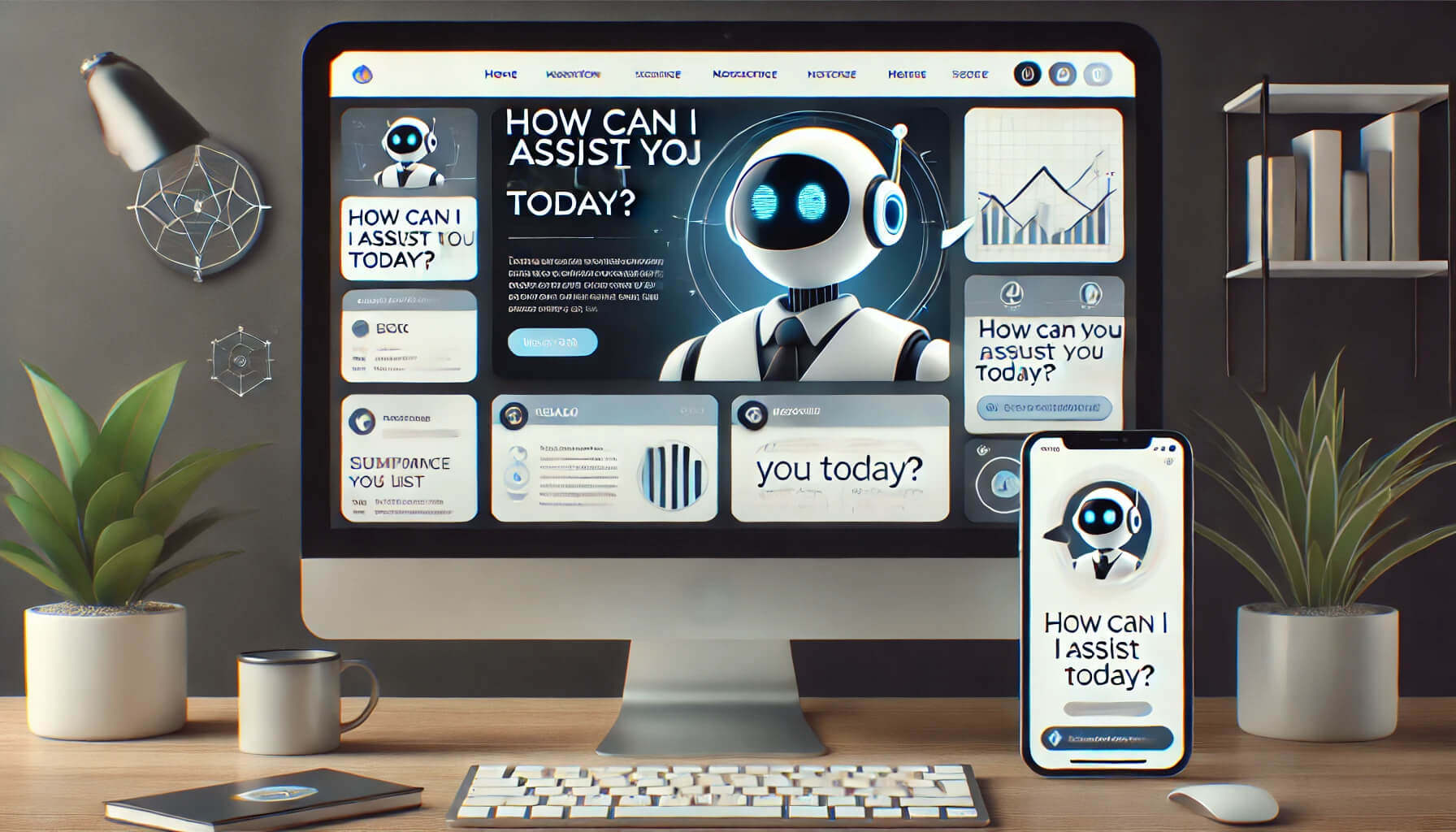
Creating Human-Like Interactions
Some AI tools run on large language models (LLMs). These are AI systems trained on huge amounts of text, and they’re changing how you can talk with customers. LLMs help chatbots give answers that sound natural and fit each question. The chat feels less like a phone tree and more like a helpful front desk.
LLMs help chatbots understand what a customer wants and why. Then the chatbot can reply the right way, which makes each visit feel more personal. For a small team, that means quick, friendly answers without hiring more staff.
Real-Time Answers for Better Customer Service
Our AI tools use retrieval-augmented generation (RAG). In plain terms, the chatbot looks up your current facts before it answers, instead of guessing from memory. A customer might ask if a product is in stock, where their order is, or whether you work on Saturdays. The bot checks your data first, then replies. A real estate office can point it at listings in its real estate management system.
Our chatbots link to a vector database, which is a searchable store of your business info. That database can live on a private cloud server you control. It finds the passage that best matches the question, even if the wording differs. RAG cuts down on wrong answers a lot. It doesn’t wipe them out, which is why we test and set limits.
Automating Routine Customer Service Tasks
You can also simplify your operations with function calling in our AI chatbots. Function calling lets a chatbot do real tasks. It can check order status, book a time, or pass tricky issues to a human. That takes routine work off your staff.
We keep these actions narrow on purpose. A bot that can look up an order is useful. A bot that can issue refunds on its own is a risk. Your staff can then focus on the calls that need a human touch.
Limits and Risks of AI Customer Service
AI chatbots are useful for customer service, but they aren’t magic. Before you add one, know where they go wrong.
Accuracy: Your Bot Speaks for You
AI can give a wrong answer that sounds right. In 2024, a Canadian tribunal held Air Canada liable after its chatbot gave a customer the wrong refund policy. The ruling said the company is responsible for what its chatbot says, just like any page on its site. So keep your bot to facts you’ve approved, and keep those facts current.
Privacy: What Goes Into the Bot
Customers will type names, phone numbers, and sometimes things they shouldn’t. Use business-grade AI plans, not free consumer apps. OpenAI, for example, says it does not train its models on business data by default. Even so, set short data retention, avoid collecting what you don’t need, and keep health or payment details out of chat.
Handoff: Knowing When to Get a Human
Upset customers, complaints, and anything involving money should go to a person. A good bot offers that option early and passes along the chat so the customer doesn’t repeat themselves. A common customer service mistake is a bot with no exit, which turns a small problem into a bad review.
How We Set Up AI Customer Service
Here’s the process we follow when we add a chatbot to your customer service:
- List the top questions. We pull them from your calls, emails, and reviews.
- Write approved answers. You sign off on hours, prices, policies, and service areas.
- Load only that content. The bot answers from your approved info, not the open web.
- Set the limits. We define what it won’t answer and when it hands off to your team.
- Test hard. We try trick questions, typos, and angry messages before launch.
- Review monthly. We read chat logs, fix weak answers, and update facts like storm closures or seasonal hours.
What AI Customer Service Costs
Customer service AI pricing depends on the setup. Off-the-shelf tools often charge per result. Intercom’s Fin agent, for example, lists $0.99 per outcome with a monthly minimum. A custom bot built on a model’s API bills by usage instead, which is often cheaper at low volume but needs setup and upkeep.
AI customer service isn’t for everyone. If you get a handful of calls a week, a clear FAQ page and a good voicemail may serve you better.
Embracing AI for a Competitive Edge in Port Charlotte
For your business, AI isn’t about new tech for its own sake. It’s about answering customers well when your team can’t get to the phone. Set up with care, AI customer service tools save time and keep answers steady.
Start small with your top questions, keep a human in the loop, and grow from there. Want a straight answer on whether a chatbot fits your business? Contact us today for a free consultation.
AI Customer Service FAQ
No. It handles repeat questions so your people can focus on sales, service, and problems that need judgment.
Yes, though limiting it to your approved content cuts the risk a lot. Regular log reviews catch what slips through.
Most of the time goes into gathering and approving answers. The more ready your FAQs and policies are, the faster you launch.
 Call Now